“And all the spaces of our past moments of solitude, the spaces in which we have suffered from solitude, enjoyed, desired, and compromised solitude, remain indelible within us and precisely because the human being wants them to remain so.”
— Gaston Bachelard, The Poetics of Space
Drawing on three moments in Tina Maria Nielsen’s sculptural practice spanning three decades, the exhibition traces a movement through the artist’s materially grounded approach and further into the inner realms of experience her works evoke. The exhibition explores the tensions that run through Nielsen’s practice: between the exterior and the interior, image and material, the familiar and the displaced.
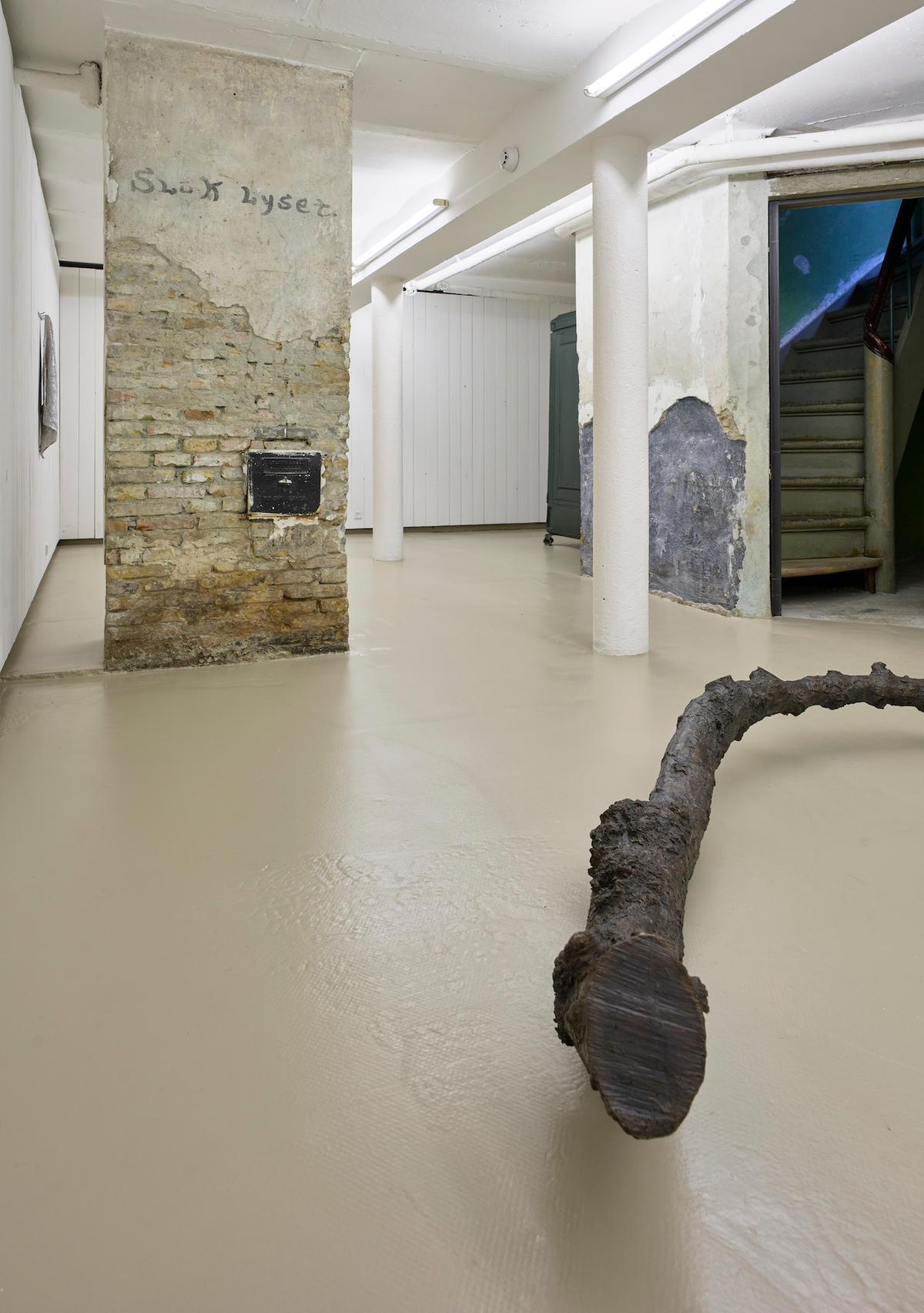
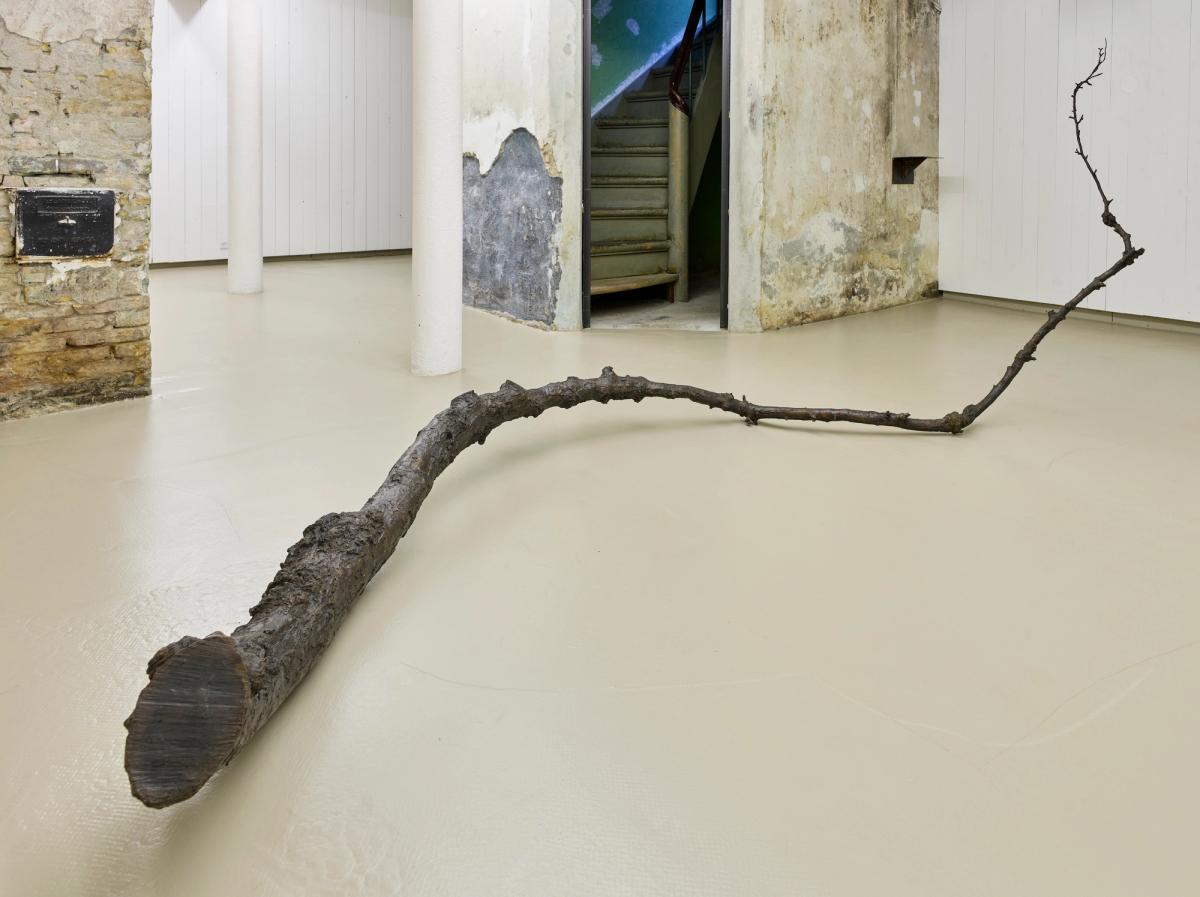
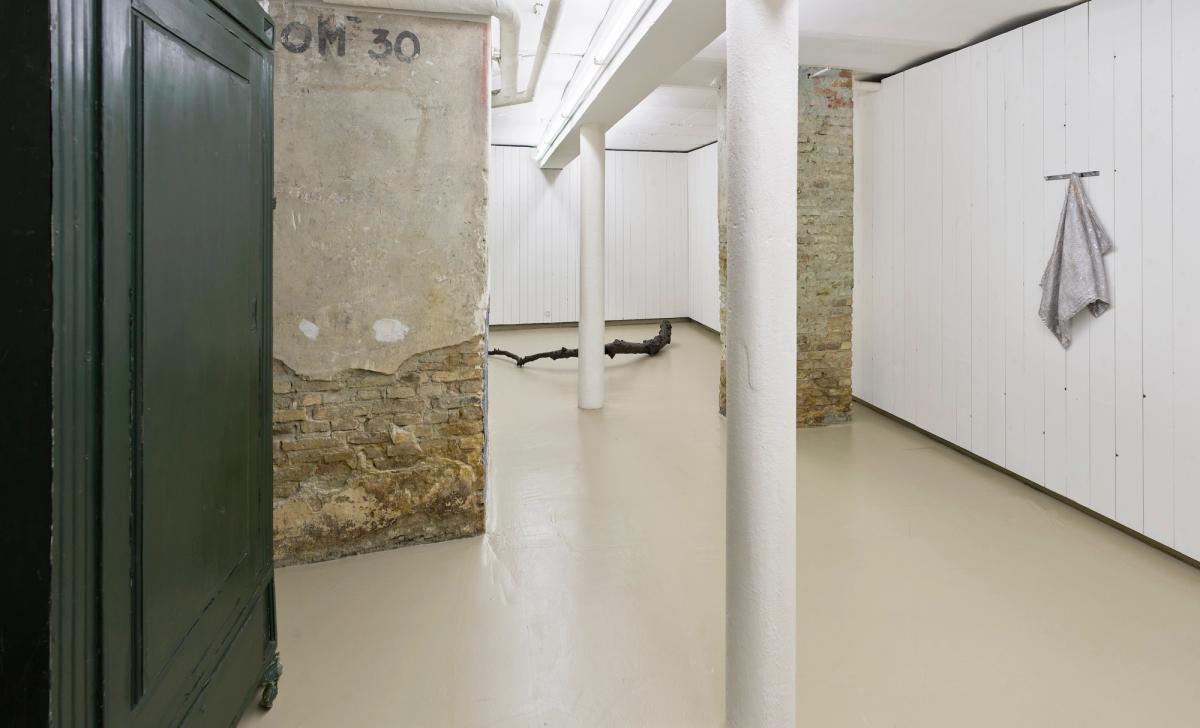
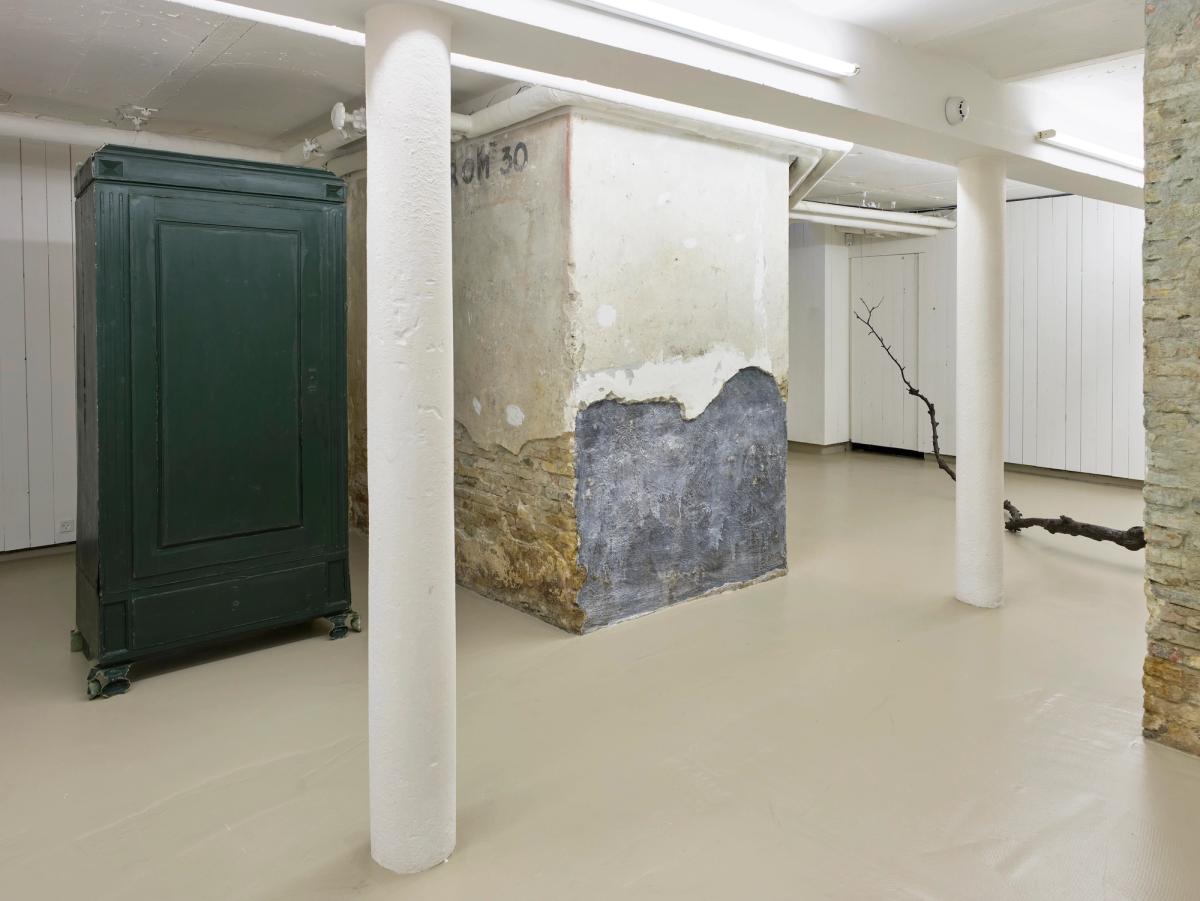
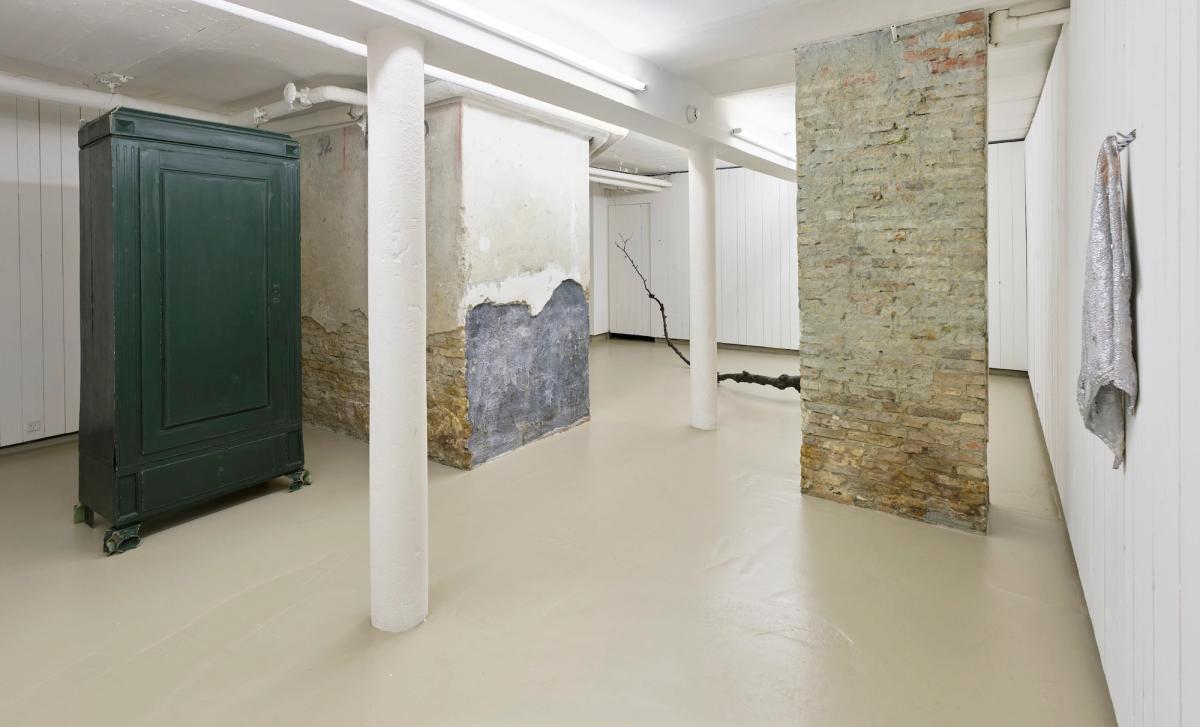
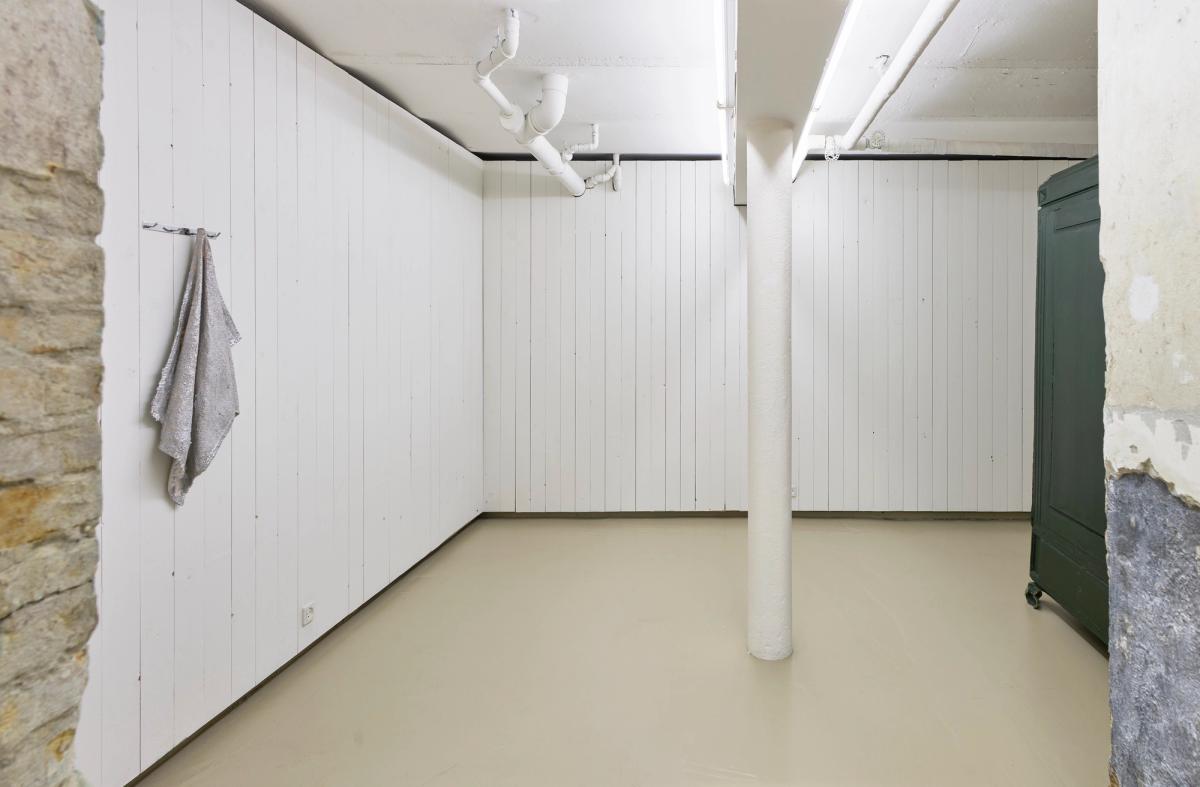
The three sculptures—Aflukke (1997), Line of Descent (2013), and Hanging In (2026)—each take a familiar object or form as their starting point: a wardrobe, an apple tree, a towel. Yet through different materials and processes, these recognizable forms are transformed, shifting the way we see and understand them. Aflukke is made as a polyester imprint, Line of Descent as a bronze cast, and Hanging In is cast in aluminium.
In Aflukke (1997), Tina Maria Nielsen has coated a wooden wardrobe in polyester and turned its sides inside out. The result is a negative imprint of the wardrobe’s outer surface. With this simple gesture, Tina Maria Nielsen directs our attention to the wardrobe’s exterior, while sealing off the space within.
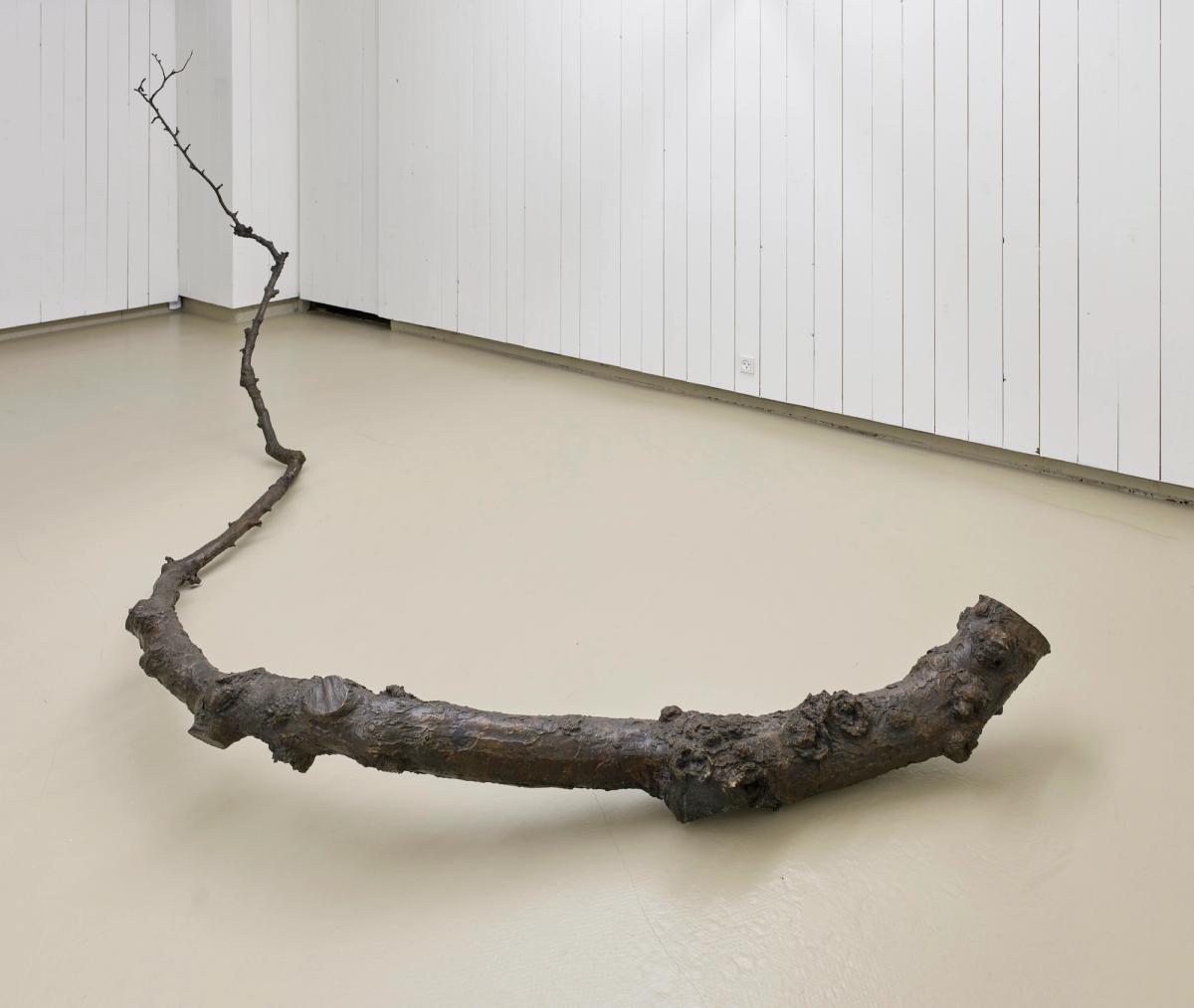
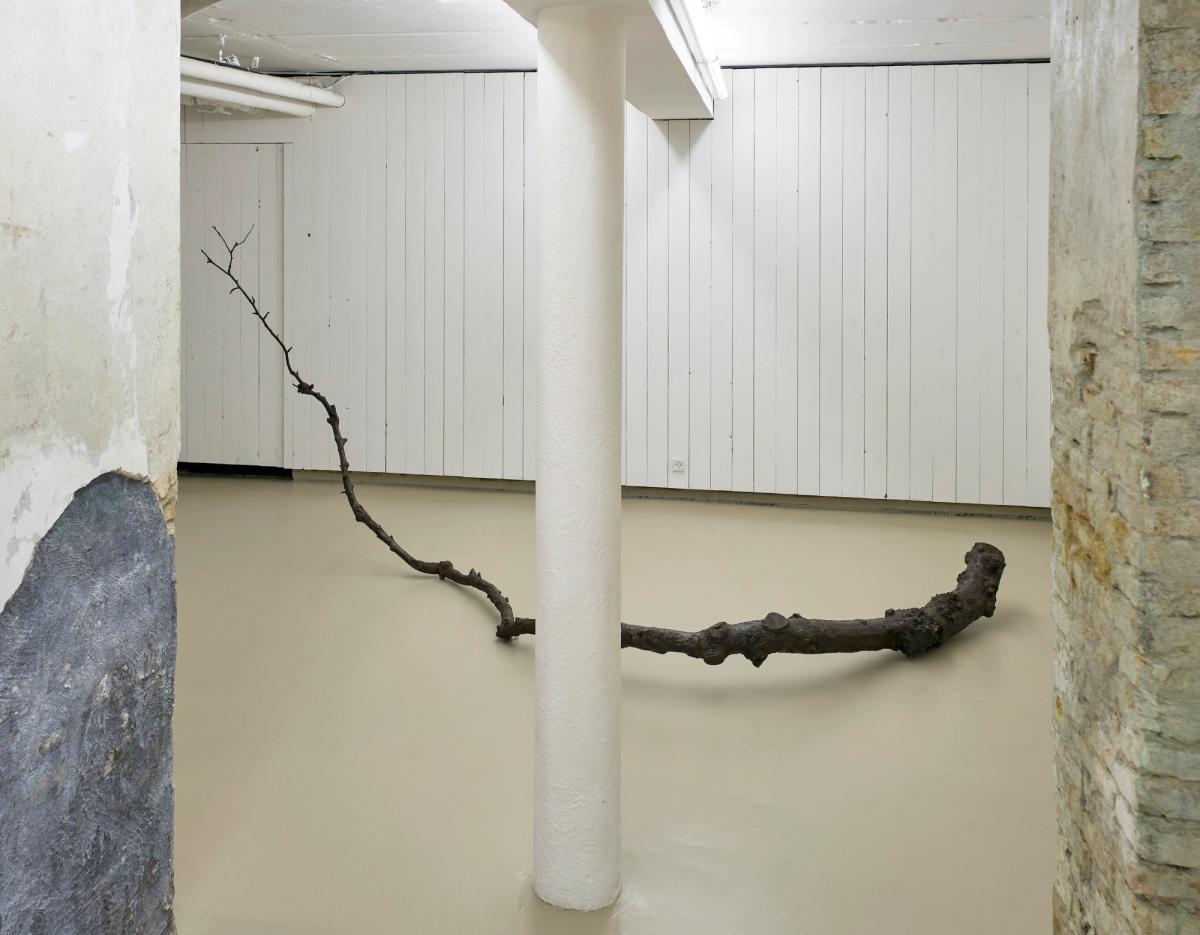
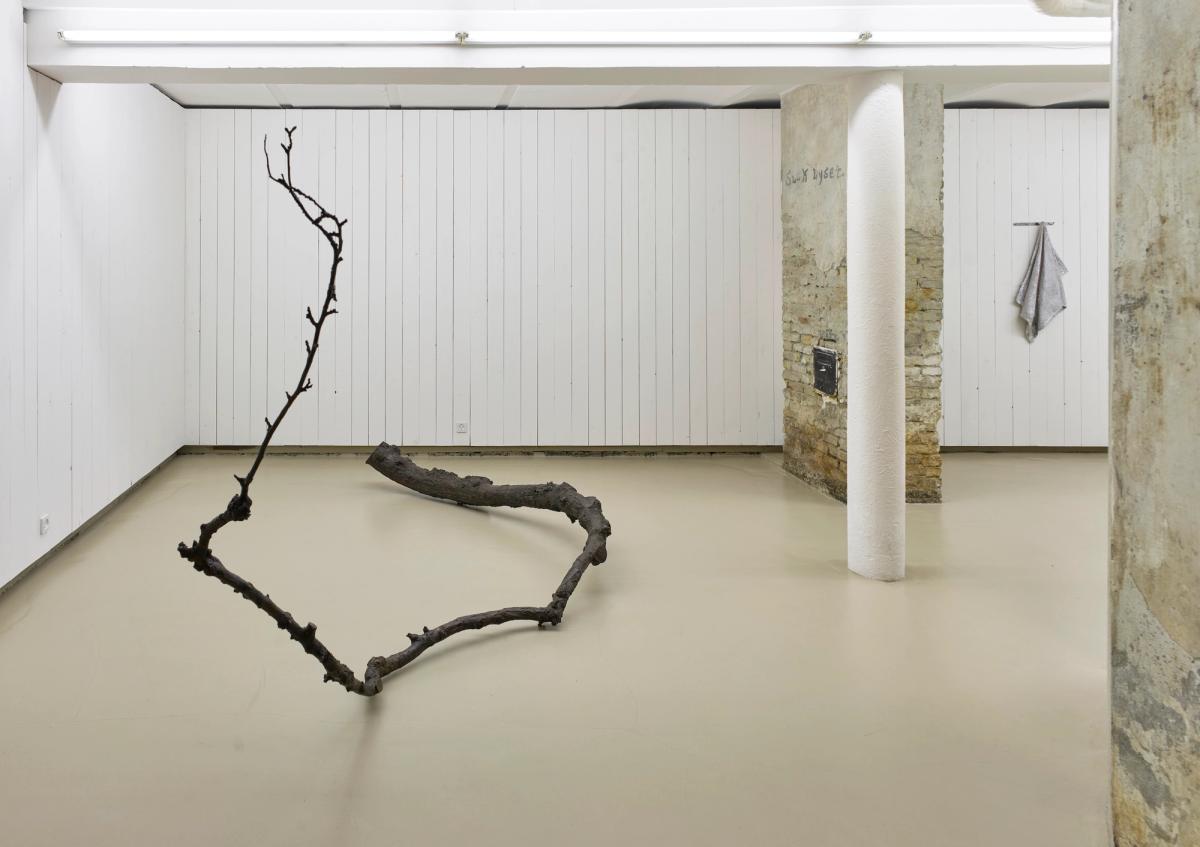
In Line of Descent (2013), the passage of time becomes legible through the choice of material and the way it is worked. A heavily pruned apple tree has been cast in bronze, preserving the tree from trunk to branch as a ‘frozen archive’ of its life and growth. Its annual rings, pollarding, and pruning remain visible in the surface. At the very tip, a single flower bud emerges, pointing towards a continuation in time.
Absence is embedded in Tina Maria Nielsen’s sculptures—not only as traces of human presence, but also as traces of the making of the works themselves. In Hanging In (2026), the towel points to the absence of the body and skin with which its function is intimately connected. It remains as both image and form, while also bearing the traces of the object and the physical process that went into making the sculpture. The casting channels have been left roughly cut, and the surface is barely worked. This rawness preserves the traces of the work’s making, allowing the process to remain visible and palpable in the finished sculpture.
Throughout Tina Maria Nielsen’s work, the tension between the immediate readability of the image and the resistance of the material keeps the sculptures open. What first appears to be an object gradually reveals itself as a trace of something absent: a body, an action, a moment in time. Through the material, our gaze moves from what is seen towards what is sensed and remembered, opening a space for our own experience, reflection, and silence.